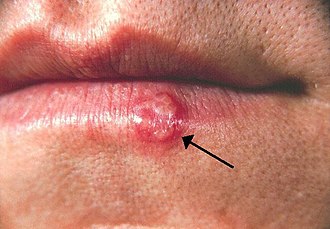
Herpes simplex virus (HSV) is one of the most widespread viral infections in the world — the WHO estimates that around two-thirds of people under 50, some 3.8 billion, carry HSV-1. Despite its prevalence, there is still considerable confusion and stigma surrounding the diagnosis.
In this article we explain what HSV is, how HSV-1 differs from HSV-2, what an outbreak looks like, when it is urgent, and what you can do about it.
What is herpes simplex virus?
Herpes simplex virus (HSV) is a lifelong viral infection that causes outbreaks of small, painful blisters on the skin and mucous membranes. There are two main types:
- HSV-1: Typically responsible for oral herpes, causing cold sores (herpes labialis) around the mouth and on the lips. HSV-1 is extremely common and is most often transmitted in childhood through kissing or touching.
- HSV-2: Primarily associated with genital herpes, causing outbreaks on the genitals or the surrounding area. HSV-2 is transmitted almost exclusively through sexual contact — but it can also pass from mother to baby during delivery, which is what causes neonatal herpes.
It is important to understand that HSV says nothing about hygiene or sexual behaviour. The virus is highly contagious and is often passed on by people who do not know they carry it.
When is herpes an emergency?
Most herpes outbreaks are uncomfortable rather than dangerous. Four situations, however, need to be seen by a doctor the same day.
When to seek urgent help
Eczema herpeticum: HSV spreading across eczema-affected skin, producing rapidly spreading, painful, punched-out erosions, often with fever — this needs antiviral treatment the same day. Ocular herpes: blisters on or near the eye, eye pain or any change in vision may mean HSV keratitis, which can damage sight and must never be treated with a steroid drop or cream. Neonatal herpes: a first genital episode in the third trimester of pregnancy is an obstetric emergency — tell your midwife or obstetrician immediately. HSV encephalitis: confusion, drowsiness, severe headache or fever alongside a cold sore needs emergency assessment.
Eczema herpeticum is the reason everyone with atopic eczema should know this warning sign. A skin barrier that is already damaged gives the virus a clear run, and the rash can cover large areas of skin within a day.
What does an HSV outbreak look like?
An outbreak typically follows a predictable pattern. Many people experience warning symptoms before the blisters appear:
The prodromal phase (warning symptoms)
The outbreak typically begins with tingling, stinging, itching or numbness in the affected area — often 1–2 days before the blisters appear. Some people also notice local tenderness or swollen lymph nodes. This is the point at which antiviral treatment has the greatest effect.
The blister phase
Clusters of small, fluid-filled blisters then appear on a reddened base. The blisters are typically painful. With HSV-1 they usually form at the corner of the mouth or on the lips; with HSV-2 on or around the genitals, buttocks or thighs.
The healing phase
The blisters burst and form ulcers, which are then covered by a crust. Symptoms usually clear within 2–4 weeks during a first outbreak and more quickly in later ones. The skin usually heals without scarring.
What triggers an HSV outbreak?
HSV enters through the skin or mucous membranes and travels from there along a nerve to a cluster of nerve cell bodies, where it stays for life. HSV-1 settles in the trigeminal ganglion at the base of the skull, while HSV-2 settles in the sacral dorsal root ganglia at the bottom of the spine. That is why each type returns to the same region — HSV-1 around the mouth, HSV-2 around the genitals, buttocks and thighs. Certain factors can wake the virus and trigger a new outbreak:
- Stress and fatigue: Psychological or physical stress is one of the most common triggers.
- A weakened immune system: Illness, immunosuppressive medication or HIV can increase the frequency of outbreaks.
- Sunlight (UV radiation): Prolonged sun exposure is a well-known trigger for cold sores (HSV-1).
- Hormonal changes: Menstruation can trigger outbreaks of either type, HSV-1 as well as HSV-2.
- Fever and infection: Colds, influenza and other infections can reactivate the virus — hence the name cold sore.
Asymptomatic shedding is also possible: the virus can be shed from the skin without visible blisters. That is why HSV can be passed on even when there is no sign of an outbreak.
Who gets HSV?
HSV is extremely widespread globally:
- HSV-1: The WHO estimates that around 64% of people aged 0–49 — roughly 3.8 billion people — were living with HSV-1 in 2020. Most are infected in childhood and never notice symptoms.
- HSV-2: Around 13% of people aged 15–49 — roughly 520 million — carry HSV-2. Prevalence is higher in women than in men.
Many infected people never have obvious symptoms, or notice only mild signs that they put down to something else. HSV can therefore be carried and passed on unknowingly.
How is herpes diagnosed?
A first genital episode should be confirmed with a type-specific PCR swab taken from a blister or ulcer. Knowing whether it is HSV-1 or HSV-2 matters: genital HSV-1 recurs far less often and sheds less than genital HSV-2, which changes both the outlook and what you tell a partner. Typing cannot be done from a photograph, and a photo cannot separate herpes from syphilis, aphthous ulcers or genital warts. A first episode in the genital area should therefore be examined in person, with a full sexual health screen offered alongside it.
Herpes simplex is sometimes confused with shingles, which is caused by a different virus in the same family. Shingles sits in a single band on one side of the body and stops at the midline, whereas HSV returns to the same small area again and again.
How is HSV treated and managed?
There is no cure for HSV — the virus stays in the body for life. Antiviral medicines can, however, shorten outbreaks, ease symptoms and lower the risk of transmission:
Episodic treatment
Antiviral agents such as aciclovir, valaciclovir or famciclovir are taken at the first sign of an outbreak and noticeably shorten the blister phase. The earlier treatment is started — ideally during the prodromal phase — the better it works.
Suppressive therapy (daily antiviral)
For frequent outbreaks (6 or more per year), daily antiviral therapy reduces the number of symptomatic recurrences by around 70–80%, and many people become completely free of outbreaks while they take it. Taken to protect a partner, the figure is a different one: it reduces the risk of passing HSV-2 to an uninfected partner by around 50%.
Trigger prevention
Sunscreen on the lips (SPF 30 or above), stress management and adequate sleep can reduce the number of HSV-1 outbreaks.
Open communication
Tell sexual partners about the diagnosis and take the necessary precautions: condoms, and avoid contact during an outbreak. If you are pregnant, your midwife and doctor need to know your herpes status so that the birth can be planned.
Medical classification: Herpes simplex infections are classified as 1F00 in the WHO's International Classification of Diseases (ICD-11). The condition presents as painful vesicles on the skin or on oral and genital mucosa and is treated primarily with antiviral medicines such as aciclovir.
Frequently asked questions
Can you live a normal life with HSV?
Yes. The vast majority of people with HSV live full and active lives. Outbreaks typically become less frequent and milder over the years. With treatment and simple precautions the risk of transmission can be reduced substantially, and there is no reason to give up relationships or a sex life.
Are HSV-1 and HSV-2 the same?
They are related but not identical. HSV-1 most often causes cold sores around the mouth and lies dormant in the trigeminal ganglion, while HSV-2 primarily causes genital herpes and sits in the sacral dorsal root ganglia. HSV-1 can be passed to the genitals through oral sex, and genital HSV-1 usually recurs less often than genital HSV-2. Both types are treated with the same antiviral medicines.
Do I need to tell my partner about the diagnosis?
Yes, it is important. Open communication about HSV status allows both of you to make informed choices and take precautions. Remember that the virus can be transmitted even when there are no visible blisters (asymptomatic shedding).
When should I contact a doctor?
See a doctor for a first genital episode, so the diagnosis can be confirmed with a PCR swab, for frequent outbreaks (6 or more per year), if you are pregnant and have genital herpes, or if you are unsure of the diagnosis. Seek help the same day for blisters around the eye, for any change in vision, for rapidly spreading sores on eczema-affected skin, and for confusion or severe headache alongside a cold sore.
Get an assessment within 48 hours
Upload photos via the SKIND app and get an assessment from a certified dermatologist — discreetly and without a waiting list. If this is your first outbreak in the genital area, you should still be examined in person so the diagnosis can be confirmed with a swab.
Disclaimer: This article is for informational purposes only and does not replace professional medical advice. Always consult a doctor or dermatologist for personal guidance and assessment of skin changes.